
Creating future heritage
Walsh Bay Arts Precinct architect Peter Tonkin discusses the monumental project to transform Pier 2/3 and Wharf 4/5.
The timber maritime structures Wharf 4/5 and Pier 2/3 at Walsh Bay were built between 1913 and 1920, housing cargo sheds and ship berthing facilities. When cargo ships outgrew the wharves, they were abandoned, becoming derelict through years exposed to saltwater and the elements. New life was breathed into Wharf 4/5 in the 1980s with the first stage redevelopment for the Sydney Theatre Company and Sydney Dance Company. Thirty years later, with significant investment from the NSW Government, the cultural revitalisation was completed, through a heritage-sensitive transformation of the State Heritage-listed Pier 2/3 and Wharf 4/5, with nine of Australia’s leading performing arts companies now calling the spaces home.
The monumental project to transform Pier 2/3 and Wharf 4/5 was entrusted to architects, Tonkin Zulaikha Greer architects (TZG) who worked to conserve and showcase as much of the open, industrial character of the original structures as possible, celebrating the engineering and creative excellence of the early 20th century buildings whilst accommodating an ambitious and technically demanding brief.
Today, the precinct generates a powerful and magnetic creative energy, open and accessible for audiences to enjoy. We sat down with Peter Tonkin from TZG to reflect on the remarkable project and the way it came to life.
Wharf 4/5 and Pier 2/3 are both enormous and quite imposing structures, built over water over 100 years ago – each roughly the size of 1.5 football fields! What was it like taking on this architectural challenge?
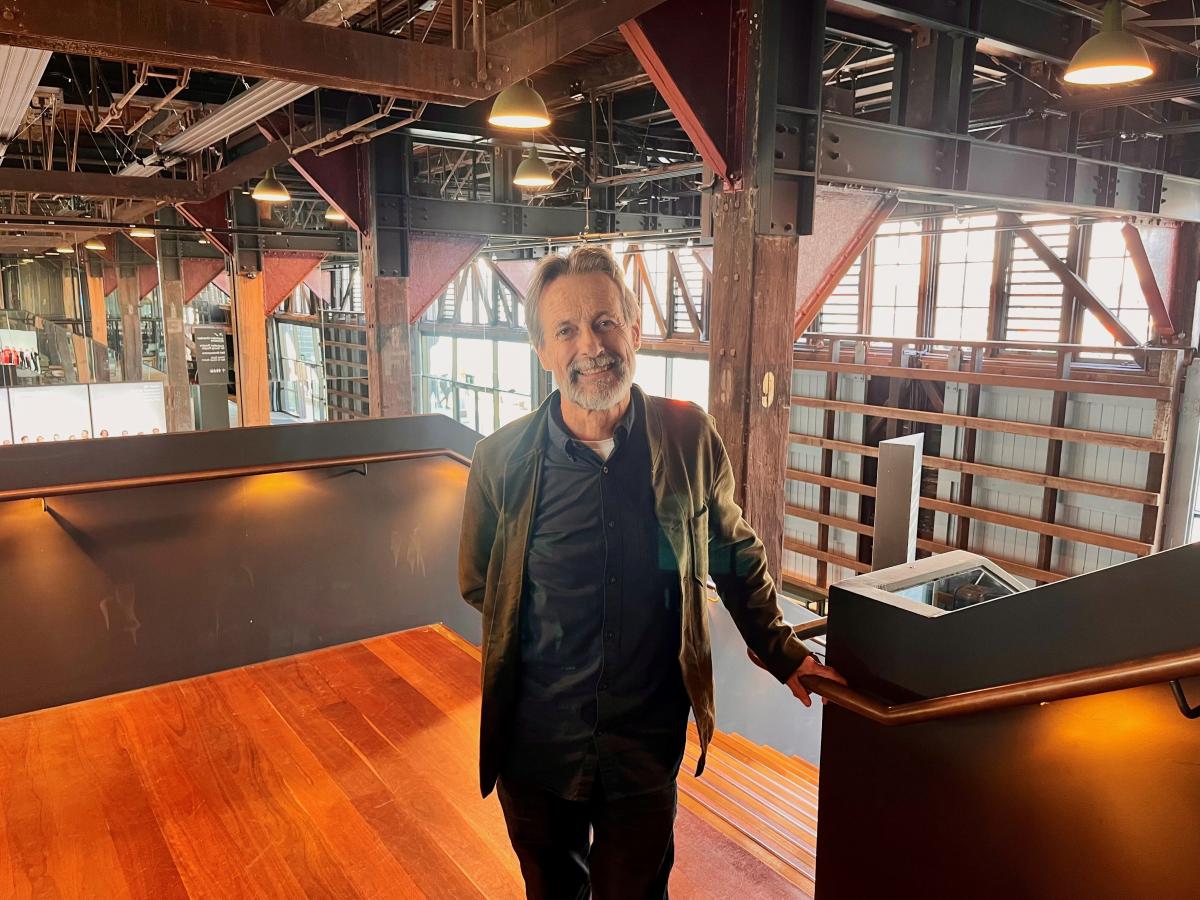
A historic place like Pier 2/3 and Wharf 4/5 has a huge emotional impact, in part due to its size, its history and mostly due to the sheer amount of timber. When we first came into this space at Pier 2/3 it was like stepping into a vast timber cathedral. The pier is the equivalent of a 40-storey building laid on its side, to give you a sense of the scale. It was built using ironbark timber, as there was a shortage of steel during World War One. There’s something about timber that grounds you, especially such large pieces. You can see the way it’s grown and lived as a tree. There’s a softness to it, while being strong and durable. We decided to make timber the hero, so rather than covering the frame up behind new materials, the beams and trusses and timber cladding are exposed, and you can see what the building is made from.
What was the most challenging aspect of this project?
The project was unconventional and challenging because we needed to both restore the building’s original fabric, both external and internal, in a heritage-sensitive way while also tailoring the internal spaces to the bespoke brief and technical requirements of each arts company. This was the daunting aspect of this project: how would we keep the majesty of scale and retain the heritage qualities while creating functional spaces meeting both the unique arts needs and the strict building and safety codes. The wharves are timber buildings sitting over saltwater, so this meant everything was hard.
The wharves were built as hard-working industrial buildings with trucks driving along the length to load and unload goods off ships through the large cargo doors. In Pier 2/3 we began with a vast dusty, empty space, the timber floor was still covered in the asphalt that allowed access for vehicles. Stripping it back revealed the enormous timber floor that was rough and uneven with gaps that needed to be filled. We sanded it back just even enough for disability access, without making it perfectly smooth so it didn’t lose its historic character.
Making the building compliant with modern fire safety codes was hard, as they are written for concrete buildings, while acoustic performance standards are based on contemporary materials. Everything was a process of investigation and modelling, that had to be gone through. For example, fireproofing involved painstaking construction work to install kilometres and kilometres of caulking and fireproof sealant along the length of the timber boards, backed up by fire testing and documenting. Every step involved added painstaking work to create a modern functional and compliant building, without compromising the vision to preserve the wharves’ heritage.
The success of the heritage sensitive transformation of Walsh Bay Arts Precinct is in its ‘virtually untouched’ look, as if nothing’s changed in 100 years. How did you approach the project to achieve this?
Keeping the history alive means you need to keep as much of the original building’s fabric and spaces as you can; from the old cargo doors that still slide open, to rewiring the original factory lights. A key strategy was to maintain the very significant long views from one end of the wharf to the other and keep the full double ceiling height in public areas, while creating two levels in the ‘back of house’.
The approach we took was to inset everything - to keep everything away from the edges. We created a series of defined internal boxes, one for each major performance space. These interior ‘boxes’ with acoustic and thermal walls, as well as many of the staircases and balconies were built away from the original timber walls. This meant we could retain the fabulous rich, textural surfaces you see all around you. All the heritage structure of the building, its massive timberwork, is exposed. New elements added are dark, like the steel reinforcing painted matte black and the anodized dark bronze walls: they effectively recede visually so the timber stands out as the hero.
One quite adventurous idea we came up with was to put mirrors throughout the building. It’s been quite successful, as it gives the illusion these spaces are still huge, unencumbered timber cathedrals. It is subtle- if it’s not pointed out to you, you don’t notice it. The use of mirrors is unusual for a heritage building, but they are an element associated with the performing arts – so it’s a simple device that brings that sense of illusion, magic, what’s real and not real, to an early century industrial building.
The foyers and circulation spaces of building, and some key event spaces, are passively cooled in summer using the natural cross breeze off the ocean, so it reduces costly and energy consuming air conditioning, and preserves historic interior finishes that otherwise would have to be insulated and so covered up.
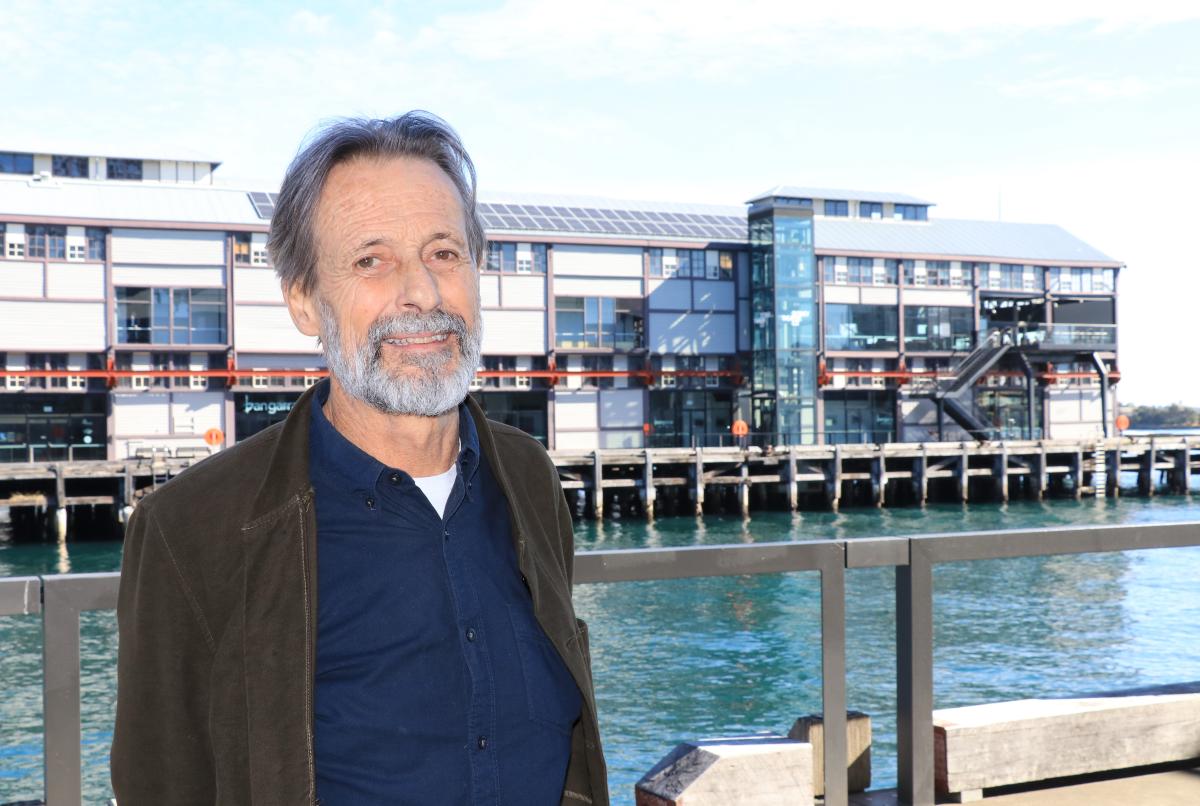
The conservation of the timber exterior was a detailed exercise, with the only major new additions being the new glass-clad lift towers, a series of stair gantries, and outdoor break-out spaces that capture world-famous Sydney views.
Tell us about the considerations needed to work with the resident arts companies.
Working with nine arts companies involved a highly collaborative process, with each bringing very unique requirements and challenges. It was never going to be a one-size fits all approach.
In the case of the Australian Chamber Orchestra (ACO) the company wanted the quality and the acoustic performance needed for a world-class orchestra. But they also gave us two instructions – they wanted the feeling of being on a wharf rather than in a concert hall, and they wanted to see the Harbour Bridge. We wanted the same thing, but the challenge as you can see, with timber walls and large glass windows to frame the magnificent views, these materials provide virtually no acoustic performance. The glass was designed acoustically to control the harbour sounds within the performance space, although in the foyers, the noise of the seagulls, and ship horns - and the sound of helicopters – is audible.
Acoustics was genuinely difficult, and a critical success factor for us. The acoustic brief alone for ACO’s space including The Nielson was a very weighty document. It took a highly collaborative approach involving technical experts from ARUP, the ACO and the contractor to find solutions.
One key advantage of building boxes within the original structure was we could adapt as much as possible to each company’s technical requirements and creative vision. For the ACO, the space is inspired by the instruments, with all the wood and the curves of violins and cellos, built within a very heavy, thick ‘box’ with a 32mm steel plate beneath the floor to isolate sound effectively. A continual worry throughout the build was would ACO be happy with the acoustics, but we managed to achieve their goals, and even the loudest ship horns are not intrusive.
The project has been recognised with many awards – including the Lachlan Macquarie Award for Heritage and National Award for Public Architecture in 2022; the NSW Architecture Medallion, Public Architecture award, Greenway Award for Heritage and a commendation for Interior Architecture; as well as Adaptive Reuse award at the National Trust Heritage Awards 2022. What is the most rewarding part of preserving Sydney’s maritime wharf history for you?
It's always nice to get to an award, you know, it’s a pat on the back, but it’s not an end in itself. The most rewarding part is that the arts companies and the audiences love it. People love coming here, especially for first time, they are blown away. What could be more magic than being actually on the harbour while watching fabulous performances. We can’t take full credit of course. It’s as much the old Sydney Harbour Trust and the original builders who created a building with the kind of genuine quality that this has. It was an amazingly visionary project when it was first built and remarkably it wasn’t torn down after it was decommissioned.
You’ve created a home for NSW’s artists and story-tellers for generations to come. In your opinion, why is it so important for heritage to be preserved and reused as cultural infrastructure?
Culture and heritage work together perfectly. I love that this place has become a springboard for heritage for the future, while keeping the heritage of the past at the same time.
Heritage is about who we are. You can’t know who you are without knowing where you’ve come from. This is why people love old buildings. You can see first-hand the vision and effort people put into a building, forming our culture. It’s such a privilege to be creating a space that is now part of our future’s heritage.
When people come into this space, promenade along its length and fill the spaces, they become as much a part of the cultural space as the building itself.
As for the companies of Walsh Bay Arts Precinct, they all produce such extraordinary work, they need somewhere extraordinary to create it and present it. To think that ACO spent years in a space three stories underground, with absolutely no windows or natural light. Companies like that need to be celebrated, in a place that supports the quality of what they do. We’re so lucky to have Walsh Bay. There’s nothing like it in the world.
About Tonkin Zulaikha Greer
Tonkin Zulaikha Greer has a special interest in public spaces, public buildings and “edge” architecture, often providing buildings with roles and uses outside their traditional functions. The crossover between art and architecture is a springing point for a design philosophy, which takes each project as a new challenge, without reliance on established precedents. Constant reinvention of our architecture brings a surprising diversity to the completed projects, with an on-going sense of exploration and discovery. The work is consistently and thoughtfully grounded by appropriateness and sustainability.